Clindamycin
Key Points in this article
- About Clindamycin, it use and chemical structure
- Clindamycin warnings
- What is perioral dermatitis
- Alternatives Names for Clindamycin
About Clindamycin
Clindamycin CAS Number 18323-44-9 also known as Clindamycine, is the generic name of the prescription drug Cleocin. This antibiotic is used to treat certain serious bacterial infections. Clindamycin belongs to a group of medicines known as lincosamide or lincomycin antibiotics. It works by stopping bacteria from producing the protein they need to reproduce and spread infection in your body.
Clindamycin was first approved by the Food and Drug Administration (FDA) under the brand name Cleocin in 1970, and was manufactured by Pharmacia and Upjohn (now Pfizer).
Clindamycin comes in a number of different forms (capsules, creams, gels, solutions, injection, and more). It is often used to treat Perioral Dermatitis because it has a mild anti-inflammatory response.
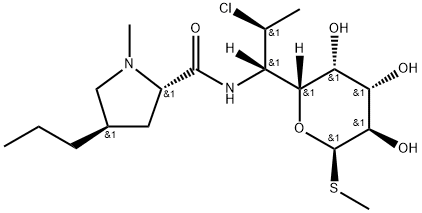
Clindamycin Warnings
Clindamycin has a high-priority, FDA-issued warning about your risk of developing a dangerous, infectious and difficult-to-treat form of diarrhea.
Therefore, Clindamycin changes the balance of microorganisms in your intestines, allowing growth of bacteria called Clostridium difficile (C. difficile). The bacteria produce toxins and inflammation that can cause diarrhea and damage your intestine walls.
After taking clindamycin, diarrhea can take months to develop, and can range from mild to severe. Symptoms include frequent diarrhea with loose, watery stool that has an extremely foul smell.
People who take clindamycin for long periods of time are at increased risk of developing C. difficile diarrhea. The infection is often picked up in hospitals or nursing homes, where there are also types of C. difficile that are resistant to treatment. Therefore, your doctor should only prescribe clindamycin for serious infections that other drugs won’t treat.
Clindamycin is a known contact allergen that cause eczema and psoriasis outbreaks on the skin. Common adverse drug reactions associated with topical formulations – found in over 10% of people – include: dryness, burning, itching, scaliness, or peeling of skin (lotion, solution); erythema (foam, lotion, solution); oiliness (gel, lotion). Additional side effects include contact dermatitis in other places.
What is perioral dermatitis
A type of dermatitis called perioral dermatitis concerns a type of eczema and break out around your mouth. Your skin might be scaly and flaky with inflamed bumps that can itch and burn. Sometimes the rash spreads to the nose and eyes. Topical steroids are usually thought to be the cause, but there have been cases where the cause was chewing gum!
Alternatives Names for Clindamycin
Evoclin
Clindagel
Clindamycin Pediatric
Clin Single Use
Cleocin in 5 % dextrose
Clindacin Pac
Cleocin T
Clindacin P
Synonyms:
- 7(S)-Chloro-7-deoxylincomycin
- 7-CDL
- 7-Chloro-7-deoxylincomycin
- 7-Chlorolincomycin
- 7-Deoxy-7(S)-chlorolincomycin
- Antirobe
- Chlolincocin
- Cleocin
- ClindaDerm
- clindamicina
- clindamycin
- clindamycine
- Clinimycin
- Dalacin C
- Dalacine
- Klimicin
- Klindan 300
- 1. L-threo-D-galacto-Octopyranoside, methyl 7-chloro-6,7,8-trideoxy-6-(1-methyl-4-propyl-L-2-pyrrolidinecarboxamido)-1-thio-, trans- α-
- 2. L-threo-α-D-galacto-Octopyranoside, methyl 7-chloro-6,7,8-trideoxy-6-[[(1-methyl-4-propyl-2-pyrrolidinyl)carbonyl]amino]-1-thio-, (2S-trans)-
- 3. L-threo-α-D-galacto-Octopyranoside, methyl 7-chloro-6,7,8-trideoxy-6-[[[(2S,4R)-1-methyl-4-propyl-2-pyrrolidinyl]carbonyl]amino]-1-thio-
- Sobelin
- U 21251